
Bezvadu produkcijas uzskaites sistēma piena pārstrādes uzņēmumam
Automatizēta 4 ražošanas līniju monitoringa sistēma ar bezvadu Modbus RTU savienojumu, kas nodrošina precīzu produkcijas uzskaiti, brāķu reģistrāciju un operatoru ražības analīzi.
Klienta izaicinājumi
Nav datu par operatoru ražību
Nezināms, cik produktus katrs operators safasē maiņas laikā.
Manuāla brāķu uzskaite
Brāķu, pārfasēto un uz laboratoriju aizsūtīto produktu skaits netiek sistemātiski uzskaitīts. Dati tiek pierakstīti uz papīra vai netiek pierakstīti vispār.
Nav produkcijas pārskata
Nav informācijas, cik konkrētais produkts ticis saražots dienas, nedēļas vai mēneša laikā. Plānošana balstās uz pieņēmumiem.
Ieviestais risinājums
Kā sistēma strādā
Produktu uzskaite
Uz četrām ražošanas līnijām uzstādīti optiskie sensori BANNER QS18VP6AF250Q8 ar fona dzēšanas (BGS) funkciju, kas automātiski uzskaita cauri ejošo produkciju.
Brāķa fiksēšana
BANNER K50PTAMGRY3Q pogas (IP69K aizsardzības klase smagiem apstākļiem) ļauj operatoriem fiksēt brāķa produkciju. Programmējamā poga sniedz tūlītēju vizuālu atgriezenisko saiti — nospiežot tā maina krāsu no pulsējošas zaļas uz sarkanu, tāpēc operators vienmēr zina, ka darbība ir reģistrēta.
Bezvadu datu pārraide
Banner
R70SR2MQ bezvadu raidītāji pārraida visus sensoru un pogu datus uz centrālo vadības bloku, izmantojot Modbus RTU RS485 protokolu 2,4GHz frekvencē. Sistēma izmanto zvaigznes topoloģiju: 4 raidītāji, kas pārraida datus uz vienu centrālo uztvērēju.
Vienkāršota uzstādīšana
Signāldalītāji (VB2-FSM4.4-2FKM4 un CSB-M1250M1250-T) ievērojami samazina kabeļu nepieciešamību un novērš tradicionālo elektrosadalņu vajadzību — samazinot uzstādīšanas laiku un sarežģītību.
Datu attēlošana
Visi ražošanas dati tiek attēloti uz Turck TX710-P3CV01 HMI paneļa — izturīga 7 collu skārienekrāna, kas paredzēts rūpnieciskai videi. Operatori var redzēt reāllaika uzskaitījumus, sekot brāķa produktiem un piekļūt ražošanas pārskatiem no vienas vietas.
Sistēmas arhitektūra

No uzlabotas darbības pārskatāmības līdz spēcīgākai uz datiem balstītai lēmumu pieņemšanai – sasniegtie rezultāti atspoguļo strukturētu pieeju procesu optimizācijai un ilgtermiņa uzņēmuma efektivitātei, izmantojot piemērojamu sistēmas arhitektūru, ko var viegli paplašināt uz papildu ražošanas līnijām, lai atbalstītu ilgtspējīgu un ilgtermiņa izaugsmi.
Automātiska produkcijas izsekošana katram operatoram un ražošanas līnijai, radot skaidru, objektīvu pamatu darba novērtēšanai.
Defekti un pārstrādātie produkti tiek reģistrēti digitāli ar laika zīmogiem, tādējādi novēršot manuālo dokumentu apriti un cilvēku kļūdas.
Precīzi ikdienas, iknedēļas un ikmēneša ražošanas dati, kas pieejami analīzei, atskaišu veidošanai un darbības plānošanai.
Līdz pat trīs lietotāji var reāllaikā uzraudzīt ražošanu attālināti, nodrošinot pilnīgu pārskatāmību par darbnīcas darbību.
Sasniegtie rezultāti
HMI funkcionalitāte
Operatora interfeiss

Operatora un produkta izvēles ekrāns
Maiņas sākumā operators izvēlas sevi no saraksta un norāda, kurš produkts šobrīd tiek ražots uz līnijas.
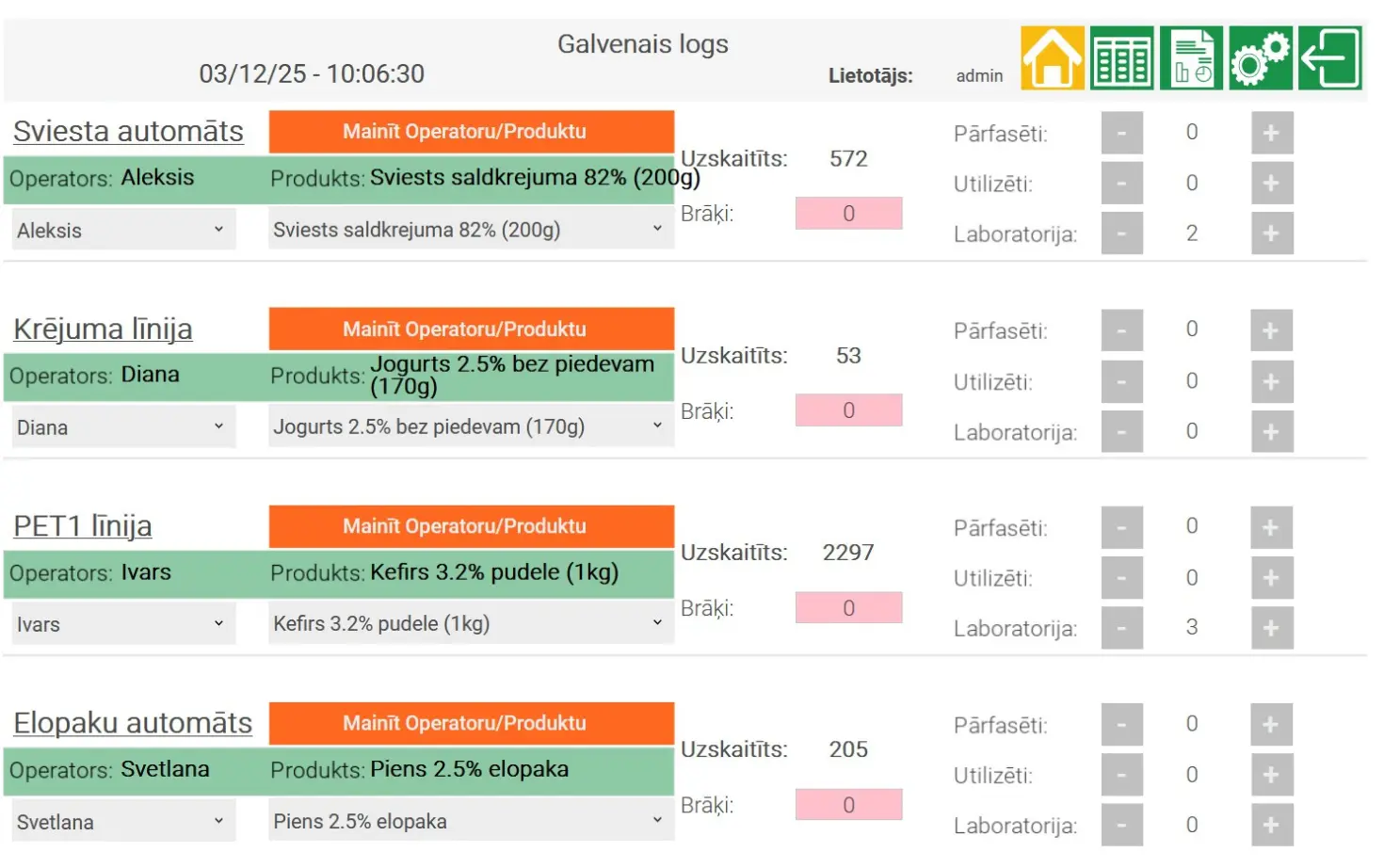
Produktu skaitīšana un brāķu reģistrēšana
Reāllaika saražoto produktu uzskaite ar interfeisu defektu reģistrēšanai un uz laboratoriju nosūtīto produktu uzskaitei.
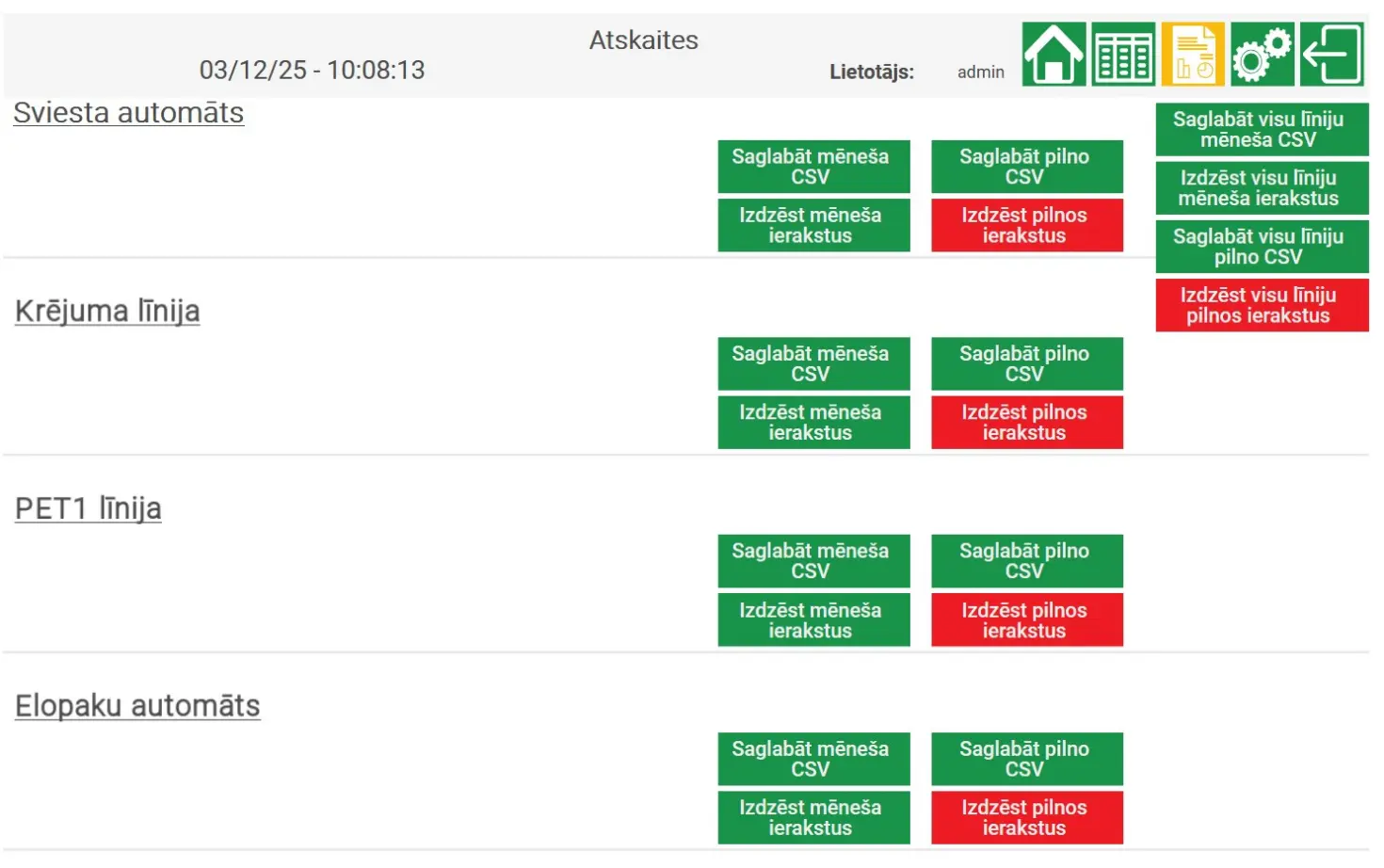
Ataskaites sadaļa
CSV eksports un filtri pēc datuma, operatora, produkta.
Nepieciešama līdzīga sistēma?
Mēs izstrādāsim pielāgotu ražošanas uzraudzības sistēmu.
Jautājumi un atbildes
4 līniju sistēmas ieviešana izmaksā zem 10 000 eiro. Galīgā cena ir atkarīga no konkrētā līniju skaita un nepieciešamo sensoru skaita.
Atkarībā no operatora izglītības līmeņa un pieredzes ar līdzīgām sistēmām – parasti 1-2 nedēļas. Sistēma ir izstrādāta intuitīvi, lai atvieglotu ikdienas darbu ražošanas telpā.
Ja sensors sabojājas, to vienkārši nomaina ar jaunu.
Jā, sistēmu var paplašināt pēc sākotnējās ieviešanas. Jūs varat pievienot līdz ~49 līnijām maksimums.
Tomēr, paplašinot sistēmu, jāņem vērā:
- Produkta plūsmas ātrums katrā līnijā
- Vispārējo sistēmas arhitektūra
Mēs palīdzēsim novērtēt optimālo risinājumu ražošanas iekārtas specifiskajām vajadzībām.